Seville to Cascais Private Transfer with Sightseeing Stops
Travel directly from:
Seville, Spain
to:
Cascais, Portugal
in one private vehicle.
The direct road journey is approximately:
410–420 km
and normally requires around:
4 hours 50 minutes to 5 hours 15 minutes of direct driving
depending on:
- Traffic
- Exact collection address in Seville
- Andalusian road conditions
- Border-route traffic
- Roadworks
- Lisbon-region traffic
- Exact destination in Cascais
- Comfort breaks
For realistic door-to-door planning, allow approximately:
5–5.5 hours
and additional margin during particularly busy travel periods.
Spain to Portugal Time Difference
This is particularly important on the Seville to Cascais route.
Mainland Portugal and mainland Spain use different local times.
Portugal is normally 1 hour behind mainland Spain.
For example:
If you leave Seville at:
09:00 Spain time
and drive for approximately five hours, your arrival in Cascais will be around:
13:00 Portugal time
rather than 14:00.
The physical journey has still taken five hours.
The local clock simply moves back one hour when entering Portugal.
Always consider the time difference when planning:
- Hotel check-in
- Restaurant reservations
- Attraction tickets
- Flights
- Trains
- Events
- Meetings
- Dinner reservations
Direct Transfer or Sightseeing Transfer?
You decide how you want to travel.
Direct Transfer
Travel:
Seville → Cascais
using the most efficient available road route.
Choose the direct option when your priority is:
- Reaching Cascais efficiently
- Hotel-to-hotel transportation
- Travelling with children
- Travelling with substantial luggage
- Avoiding airports
- Avoiding train changes
- Avoiding coach connections
- Avoiding repeated luggage handling
- Maintaining privacy
- Reaching Cascais earlier in the day
Sightseeing Transfer
Choose one of two different route concepts.
Route 1
Algarve & Ria Formosa
Route 2
Historic Interior
They are deliberately different.
Route 1 is more:
- Scenic
- Coastal
- Algarve-focused
- Atlantic
- Relaxed
- Landscape-oriented
Route 2 is more:
- Historical
- Monumental
- Roman
- UNESCO-focused
- Cultural
- Interior
Route 1 — Algarve & Ria Formosa
Seville → Cacela Velha → Albufeira → Alcácer do Sal → Palmela → Cristo Rei → Cascais
This route transforms your international transfer into a journey through southern Portugal.
The progression is:
Seville
↓
Andalusia
↓
Portugal border
↓
Ria Formosa
↓
Algarve coast
↓
Alentejo
↓
Palmela
↓
Lisbon panorama
↓
Cascais
Recommended Route 1 Stop Durations
A practical guideline is:
Cacela Velha — 30–45 minutes
Albufeira — 1–2 hours
Alcácer do Sal — 30–60 minutes
Palmela — 45–60 minutes
Cristo Rei — 30–45 minutes
How Long Does Route 1 Take?
With several sightseeing stops, Route 1 becomes a:
full-day international sightseeing transfer.
A complete version can realistically require approximately:
11–13+ hours
depending on:
- Traffic
- Border-route conditions
- Walking
- Restaurant duration
- Algarve traffic
- Sightseeing duration
- Parking
- Comfort breaks
For most travellers, we recommend selecting:
2–4 meaningful stops
rather than exploring every destination extensively.
Route 1 — Leaving Seville
Private collection can be arranged throughout accessible areas of Seville.
This can include:
- Historic centre
- Santa Cruz
- Nervión
- Triana
- Los Remedios
- Alameda area
- Sevilla Santa Justa Railway Station
- Plaza de Armas area
- Seville Airport
- Hotels
- Apartments
- Private residences
Seville Historic Centre Collection
Parts of central Seville contain:
- Pedestrian streets
- Narrow historic roads
- Restricted traffic
- Controlled-access areas
- Limited stopping locations
Your driver will collect you as close as legally and safely possible to your accommodation.
Santa Cruz Collection
Private collection can be arranged from an appropriate accessible point around:
Santa Cruz
when booked accordingly.
Santa Cruz is one of Seville’s most historic areas and contains:
- Narrow streets
- Whitewashed houses
- Orange trees
- Small squares
- Historic courtyards
- Former Jewish-quarter heritage
Sevilla Santa Justa Collection
Private collection can begin directly from:
Sevilla Santa Justa
the city’s principal railway station.
Seville Airport Collection
Private collection can also begin from:
Seville Airport — SVQ
when booked accordingly.
Airport collections are subject to the applicable airport waiting and meeting conditions.
Please provide your:
- Flight number
- Scheduled arrival time
- Passenger name
- Contact number
when booking.
Seville Before Departure
If you still have time before collection, Seville offers an extraordinary concentration of historic monuments.
Major attractions include:
- Seville Cathedral
- Giralda
- Real Alcázar
- Santa Cruz
- Archivo de Indias
- Plaza de España
- María Luisa Park
- Triana
- Guadalquivir riverfront
Seville Cathedral
Seville Cathedral is one of the city’s defining landmarks.
The cathedral occupies the site of the former Almohad mosque and forms part of the monumental heart of Seville.
The Giralda
The:
Giralda
began as the minaret of the Almohad mosque and later became the cathedral’s bell tower.
It remains one of Seville’s most recognisable symbols.
Real Alcázar
The:
Real Alcázar
lies immediately beside the Cathedral and combines multiple architectural periods.
Santa Cruz
The historic Santa Cruz neighbourhood is particularly suitable for walking.
Its character includes:
- Narrow lanes
- Small plazas
- Whitewashed façades
- Orange trees
- Historic courtyards
Plaza de España
Plaza de España is another major Seville landmark, known for:
- Monumental architecture
- Ceramic decoration
- Bridges
- Canal
- Large open plaza
Triana
Across the Guadalquivir lies:
Triana
a neighbourhood strongly associated with:
- Traditional ceramics
- Flamenco
- Local culture
- Restaurants
- River views
Route 1 — Spain to Portugal Border
Travel west from Seville through:
Huelva
towards:
Ayamonte
and cross into Portugal near:
Vila Real de Santo António / Castro Marim
The principal motorway corridor uses:
A-49 in Spain
and:
A22 in Portugal.
Are There Routine Border Controls?
Portugal and Spain are members of the Schengen Area.
There are normally no permanent routine immigration checkpoints on the main road crossing.
However:
all passengers should carry valid identification and any travel documentation required for their nationality and legal status.
Temporary controls may occasionally be introduced.
Passengers remain responsible for their legal eligibility to enter Portugal.
Why Start with Cacela Velha?
Cacela Velha provides an immediate contrast after leaving Spain.
The journey changes from:
Andalusian motorway
to:
quiet historic Eastern Algarve
and:
Ria Formosa scenery
before continuing west.
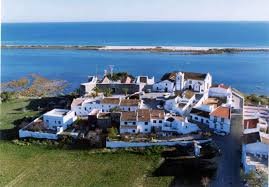
Cacela Velha Historic Centre
The small historic settlement combines:
- Whitewashed buildings
- Traditional Algarve architecture
- Fortress
- Church
- Narrow streets
- Panoramic coastal position
Cacela Velha Fortress
The current defensive structure occupies a strategic position above the coast and lagoon.
The location reflects centuries of military and maritime importance.
Ria Formosa Viewpoint
The elevated viewpoint is the principal reason many travellers visit Cacela Velha.
The landscape below includes:
- Tidal channels
- Saltwater lagoons
- Sandbanks
- Islands
- Atlantic beach
Can Cacela Velha Be Only 30 Minutes?
Yes.
It is particularly suitable for a short scenic stop.
Can We Have Coffee in Cacela Velha?
Potentially, depending on:
- Season
- Opening hours
- Local business availability
The village is small, so do not rely on it for a tightly scheduled meal stop.
Why Include Albufeira?
Albufeira provides a substantial Algarve experience before travelling north.
The contrast becomes:
Ria Formosa
↓
central Algarve coast
↓
Alentejo
↓
Lisbon region
↓
Cascais
Albufeira Old Town
The historic centre combines:
- Whitewashed houses
- Pedestrian streets
- Restaurants
- Bars
- Cafés
- Shops
- Beach access
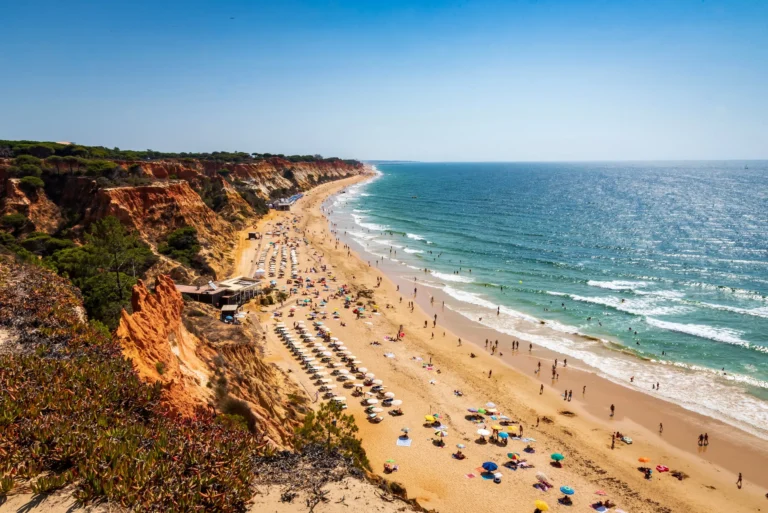
Praia dos Pescadores
Fishermen’s Beach lies directly beside the historic centre.
A sightseeing stop can combine:
- Old Town
- Atlantic beach
- Lunch
- Coffee
- Short walk
Praia do Peneco
Peneco is another central beach closely connected with the Old Town.
Lunch in Albufeira
For Route 1:
Albufeira is our principal recommended lunch stop.
A balanced visit can include approximately:
1.5–2 hours
for:
- Old Town
- Beach
- Lunch
- Short walk
Lunch is not included unless specifically arranged.
Can Albufeira Be Only One Hour?
Yes.
A shorter visit can focus on:
- Old Town
- Praia dos Pescadores
- Viewpoint
- Coffee
Can We Spend Longer in Albufeira?
Yes.
However, additional sightseeing time delays arrival in Cascais.
Why Include Alcácer do Sal?
Alcácer provides a quieter transition between:
the Algarve
and:
the Lisbon region
without requiring several hours.
It works particularly well for:
- Coffee
- Comfort break
- River views
- Short walk
- Photography
Sado River
The Sado forms a defining part of the landscape.
The historic town overlooks:
- River
- Agricultural plains
- Traditional buildings
- Alentejo countryside
Can Alcácer Be Only 30 Minutes?
Yes.
A short visit can focus on:
- Riverfront
- Photography
- Coffee
- Brief walk
Alternative Lunch in Alcácer do Sal
Yes.
If you prefer a quieter meal than Albufeira, Alcácer can be used as the lunch destination.
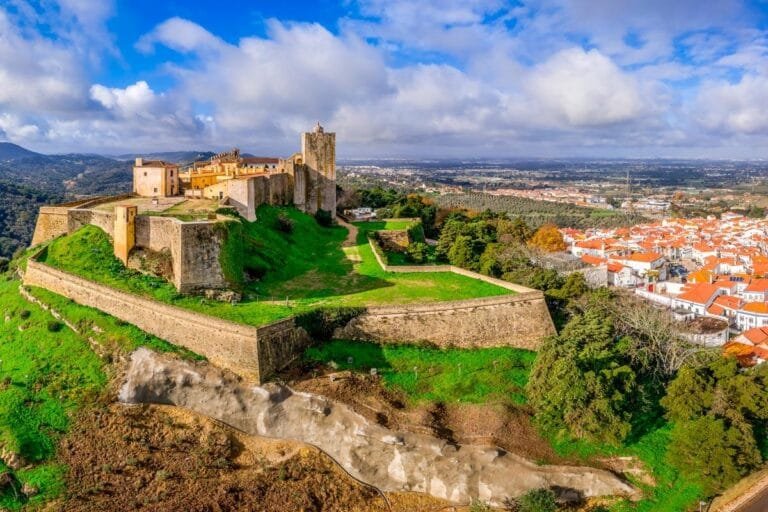
Palmela Castle
Palmela played an important defensive role throughout Portuguese history.
The castle later became strongly associated with:
the Order of Santiago
Why Visit Palmela?
Palmela creates an attractive final historical stop before entering the greater Lisbon area.
Can Palmela Be Only 45 Minutes?
Yes.
A shorter visit can focus on:
- Castle surroundings
- Viewpoints
- Photography
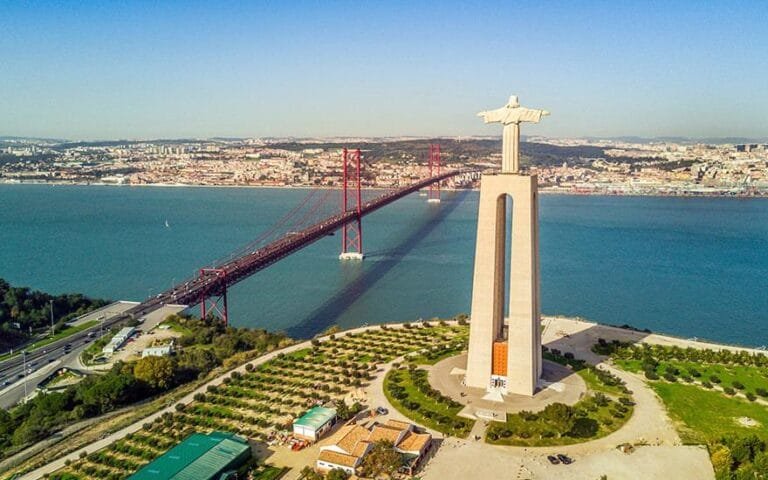
Why Finish Route 1 at Cristo Rei?
Cristo Rei provides an excellent finale.
The journey has progressed through:
Seville
↓
Ria Formosa
↓
Algarve
↓
Alentejo
↓
Lisbon panorama
before finishing in:
Cascais
Can Cristo Rei Be Only 30 Minutes?
Yes.
A short stop can focus on:
- Lisbon skyline
- Tagus River
- Bridge
- Exterior monument
- Photography
Can Cristo Rei Be a Sunset Stop?
Potentially.
This depends on:
- Season
- Earlier sightseeing
- Traffic
- Opening conditions
Route 1 — Best Combinations
Shorter Scenic Combination
Cacela Velha + Albufeira
Algarve & Panorama
Cacela Velha + Albufeira + Cristo Rei
Relaxed Combination
Cacela Velha + Alcácer do Sal + Cristo Rei
History & Coast
Cacela Velha + Albufeira + Palmela
Full Route 1
Cacela Velha + Albufeira + Alcácer do Sal + Palmela + Cristo Rei
Route 1 — Who Is It Best For?
Choose Route 1 if you prefer:
- Algarve
- Ria Formosa
- Beaches
- Atlantic scenery
- Smaller historic villages
- Scenic photography
- Relaxed sightseeing
- Greater landscape variety
Route 2 — Historic Interior
Seville → Mérida → Elvas → Évora → Cascais
Route 2 follows a completely different concept.
Instead of travelling through the Algarve, it crosses:
Andalusia
↓
Extremadura
↓
Portuguese frontier
↓
Alentejo
↓
Cascais
It is the stronger route for travellers interested in:
- Roman history
- UNESCO heritage
- Archaeology
- Military history
- Historic cities
- Architecture
Recommended Route 2 Stop Durations
A practical guideline is:
Mérida — 1.5–2.5 hours
Elvas — 45–90 minutes
Évora — 2–3 hours
How Long Does Route 2 Take?
With all three substantial sightseeing stops, Route 2 becomes a:
full-day cultural transfer
and can realistically require approximately:
10–12+ hours
depending on:
- Traffic
- Attraction opening hours
- Sightseeing duration
- Lunch
- Walking
- Parking
- Comfort breaks
For most travellers, our strongest combination is:
Mérida + Évora
with Elvas as a shorter orientation stop.
Why Visit Mérida?
Mérida provides one of the strongest cultural starts possible on the Seville to Cascais journey.
You experience:
Roman Spain
before travelling into:
fortified Portugal
and later:
UNESCO Évora
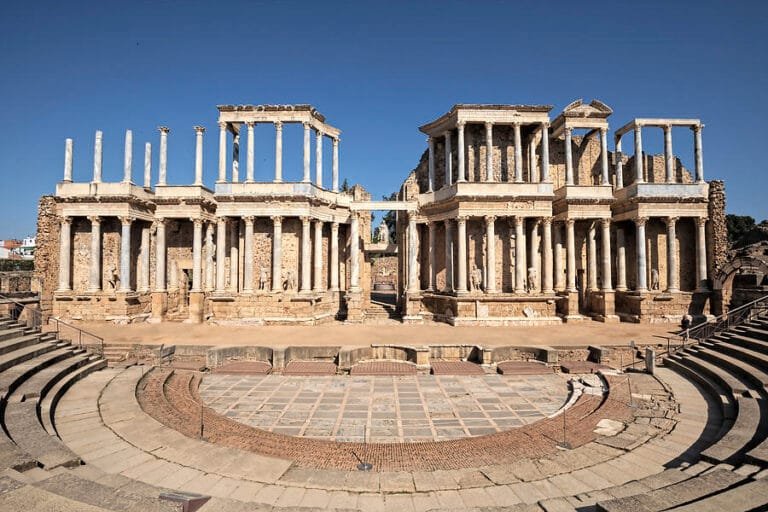
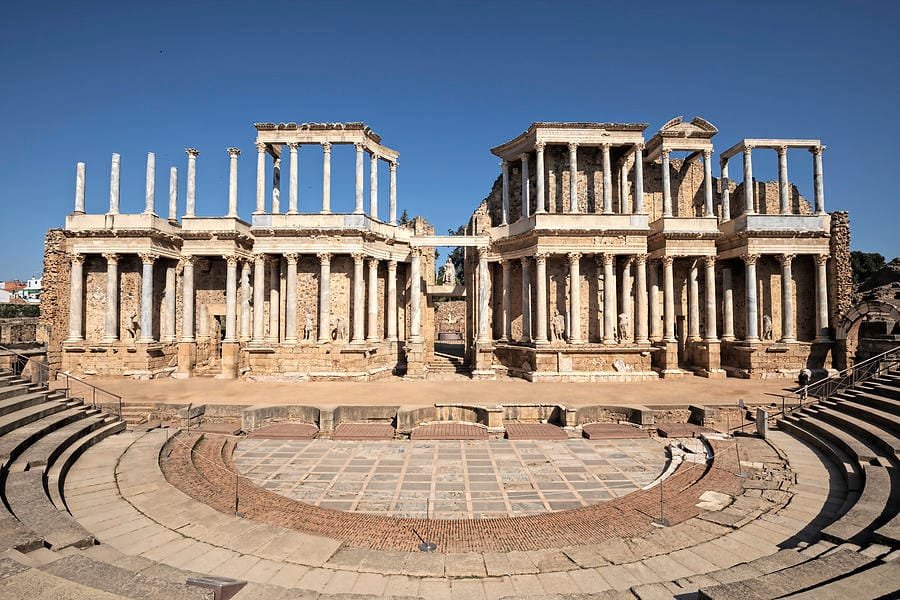
Roman Theatre
The Roman Theatre is one of Mérida’s best-known monuments.
It remains an active cultural venue as well as an archaeological site.
Amphitheatre
The amphitheatre forms part of the principal monumental complex.
Roman Bridge
The historic Roman infrastructure of Mérida includes an important bridge across the Guadiana.
Roman Circus
The archaeological ensemble also preserves remains of the Roman circus.
Aqueducts
Mérida retains exceptional evidence of Roman water engineering.
Alcazaba
Mérida’s history did not end with Rome.
The city also contains important later heritage including:
Islamic fortifications
and medieval structures.
How Much Time Should We Allow?
For the principal archaeological area:
1.5–2.5 hours
is recommended.
For a more complete exploration:
allow several hours.
Lunch in Mérida
Mérida can be an excellent lunch stop.
This is particularly convenient when:
- You leave Seville early
- You want to explore the Roman complex
- You prefer lunch in Spain before entering Portugal
Route 2 — Spain to Portugal Border
After Mérida, continue west towards:
Badajoz
and cross into Portugal towards:
Elvas
There are normally no routine permanent immigration checkpoints.
Nevertheless, passengers should carry:
- Passport
- National ID where legally applicable
- Visa or residence documentation when required
Passengers remain responsible for their travel documentation.
Why Visit Elvas?
Elvas is an ideal border stop because its history is inseparable from Portugal’s frontier with Spain.
The route becomes:
Roman Spain
↓
Portuguese frontier fortress
↓
historic Alentejo
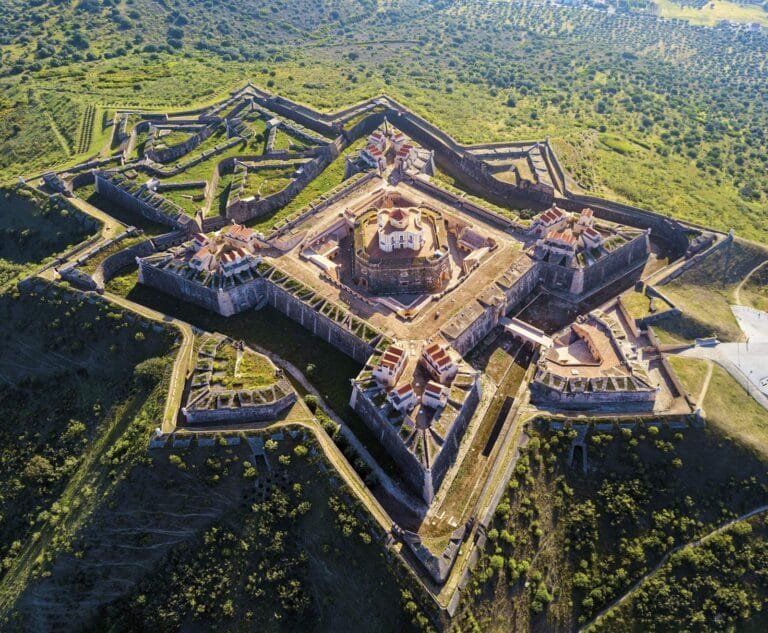
Elvas Fortifications
The fortified system around Elvas developed particularly between the:
17th and 19th centuries
and forms an exceptional military landscape.
Fort of Graça
The defensive complex includes the monumental:
Fort of Graça
on a hill outside the historic centre.
A full fort visit requires more time than a short city orientation.
Fort of Santa Luzia
Another important component is:
Fort of Santa Luzia
south of the historic centre.
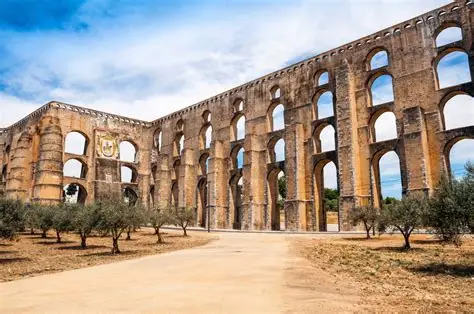
Amoreira Aqueduct
The:
Amoreira Aqueduct
is one of Elvas’ defining landmarks.
It was essential to supplying the fortified city with water during potential sieges.
Elvas Historic Centre
A short orientation can focus on:
- Historic walls
- Praça da República
- Castle surroundings
- Aqueduct viewpoints
Can Elvas Be Only 45 Minutes?
Yes.
For a road-trip orientation:
45–60 minutes
can work well.
For forts and museums, allow longer.
Why Is Évora Our Main Portuguese Stop?
Évora has enough cultural depth to become one of the highlights of the entire day.
It provides a strong contrast with Mérida.
Mérida
- Roman provincial capital
- Archaeological monuments
- Roman engineering
Évora
- Roman heritage
- Medieval city
- Portuguese architecture
- Churches
- Alentejo gastronomy
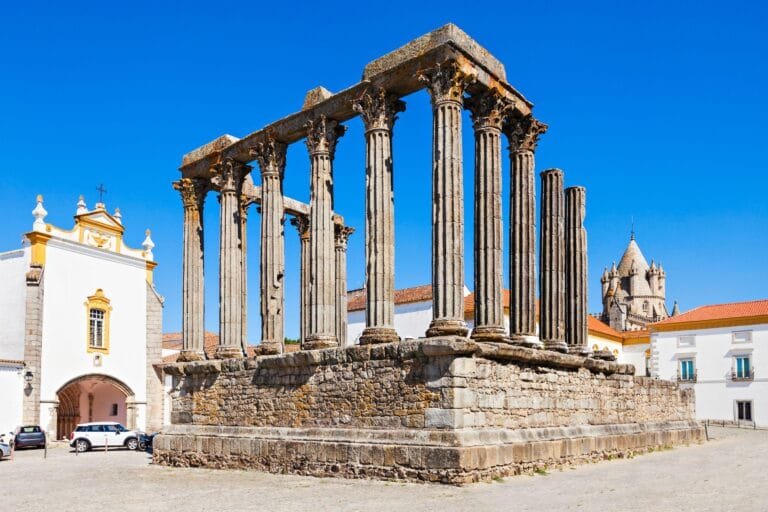
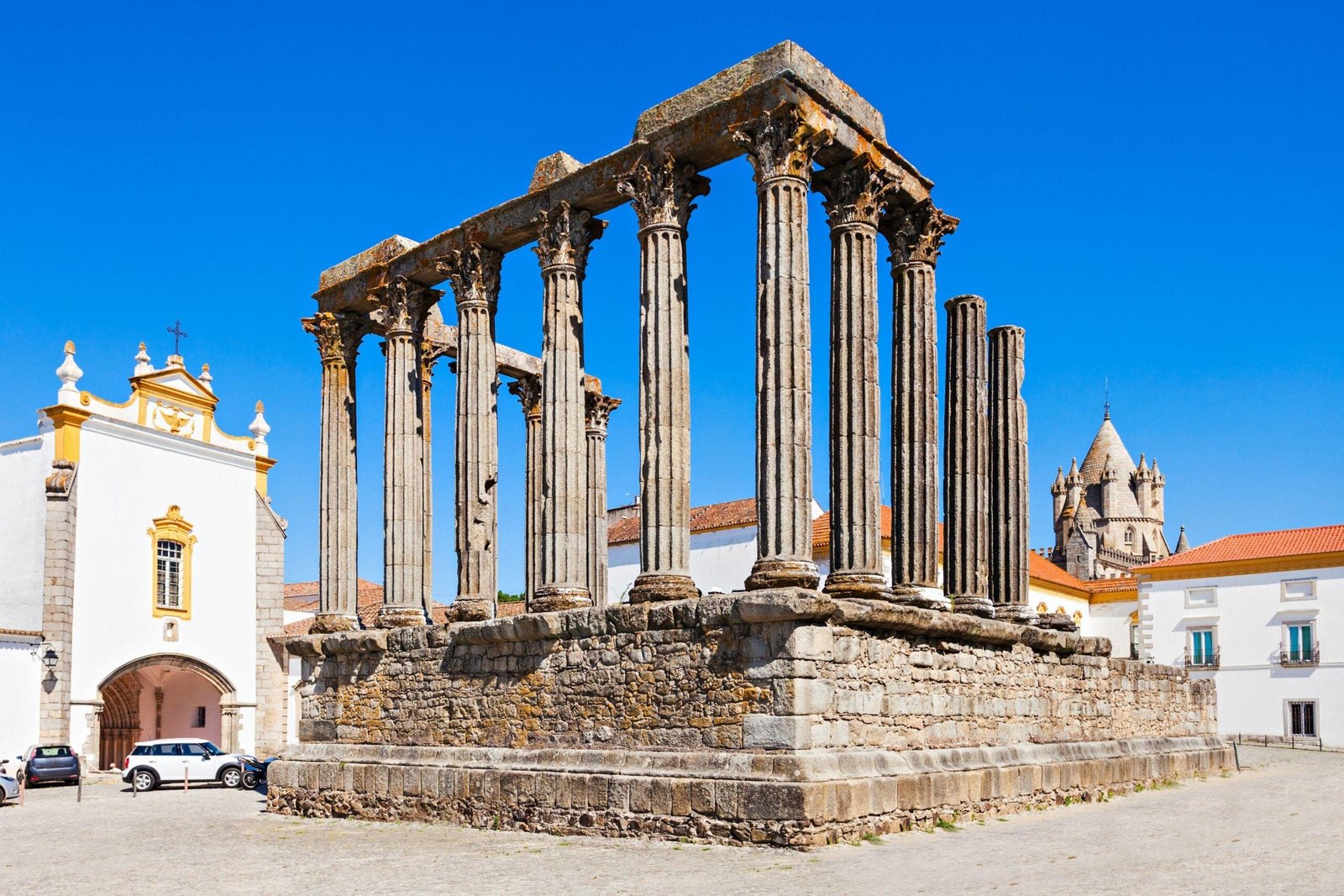
Roman Temple of Évora
The Roman Temple is one of the city’s most recognisable monuments.
Évora Cathedral
The Cathedral stands close to the Roman Temple.
Interior access depends on:
- Opening hours
- Admission
- Available sightseeing time
Praça do Giraldo
Praça do Giraldo forms one of Évora’s principal civic spaces.
Chapel of Bones
Travellers with sufficient time may visit:
Capela dos Ossos
at the Church of São Francisco.
Lunch in Évora
If you did not have lunch in Mérida:
Évora is our principal Portuguese meal recommendation.
Allow approximately:
2–3 hours
for a substantial sightseeing-and-lunch stop.
Route 2 — Best Combinations
Best Two Stops
Mérida + Évora
This is our strongest cultural combination.
Spain & Portugal History
Mérida + Elvas + Évora
Roman Focus
Mérida + Évora
Military & Portuguese Heritage
Elvas + Évora
Full Route 2
Mérida + Elvas + Évora
Which Route Do We Recommend?
There is no single correct answer.
Choose Route 1 if you prefer:
- Algarve
- Ria Formosa
- Beaches
- Atlantic scenery
- Smaller villages
- Scenic photography
- Landscape variety
- A relaxed road-trip atmosphere
Choose Route 2 if you prefer:
- Roman history
- UNESCO heritage
- Archaeology
- Military fortifications
- Historic cities
- Architecture
- Interior landscapes
Our Overall Recommendation
For travellers primarily interested in:
history and culture
we recommend:
Route 2 — Mérida → Elvas → Évora
For travellers wanting:
greater landscape variety and an Algarve experience
we recommend:
Route 1 — Cacela Velha → Albufeira → Alcácer do Sal → Palmela → Cristo Rei
Can We Mix Route 1 and Route 2?
Normally:
no.
Combining destinations such as:
Mérida + Albufeira
or:
Évora + Cacela Velha
in the same transfer creates substantial backtracking.
Choose one principal corridor.
Alternative Historic Route — Monsaraz
A separate historic alternative can be created through:
Monsaraz
The recommended alternative is:
Seville → Monsaraz → Évora → Cascais
Important — Do Not Combine Monsaraz with Mérida and Elvas
If you select:
Monsaraz
we recommend travelling:
Seville → Monsaraz → Évora → Cascais
rather than combining:
in the same itinerary.
Doing so creates an unnecessarily long and inefficient route.
Why Visit Monsaraz?
Monsaraz is a small medieval hilltop village overlooking:
Alqueva
The village combines:
- Medieval walls
- Castle
- Whitewashed houses
- Narrow streets
- Alentejo landscapes
- Panoramic views
How Long Should We Spend in Monsaraz?
Approximately:
1–1.5 hours
is suitable for most travellers.
Monsaraz + Évora
This combination is ideal for travellers interested in:
- Medieval Portugal
- Small historic villages
- Alentejo scenery
- Portuguese culture
rather than the more Roman-focused Mérida route.
Seville to Cascais by Private Driver
Booking a private driver from Seville to Cascais provides:
- International door-to-door transportation
- Seville hotel collection
- Santa Justa collection
- Seville Airport collection when booked accordingly
- One private vehicle
- Flexible departure
- No unrelated passengers
- Luggage transportation
- Optional sightseeing
- Child seats
- Comfort breaks
- Cascais accommodation delivery
- Two completely different sightseeing routes
Seville to Cascais by Car with Driver
Private transportation allows you to travel from Spain to Portugal without:
- Renting a vehicle
- Cross-border rental complications
- Returning a rental car in another country
- Airport procedures
- Train changes
- Bus changes
- Repeated luggage handling
- Navigating several countries’ transport systems
Private Transfer vs Bus
Public coach travel can be significantly cheaper.
However, there is no simple hotel-to-hotel bus journey between Seville and Cascais.
Current public itineraries can take approximately:
8.5–9 hours
depending on:
- Service
- Lisbon connection
- Final journey to Cascais
A private transfer provides:
Seville accommodation → Cascais accommodation
in one vehicle.
Private Transfer vs Train
Rail travel between Seville and Cascais is considerably more complicated.
A current railway itinerary can involve:
- Seville → Mérida
- Mérida → Badajoz
- Badajoz → Portugal
- Portuguese long-distance services
- Lisbon connection
- Cascais Line
Complete journeys can approach:
11.5–12 hours or more
depending on timetable and connections.
Private Transfer vs Flying
Flying from Seville to Lisbon can be competitive in total travel time.
A typical journey involves:
- Seville accommodation → Seville Airport
- Check-in
- Security
- Boarding
- Flight
- Lisbon Airport arrival
- Baggage collection
- Lisbon Airport → Cascais
A well-timed flight may sometimes be:
faster than travelling by road.
Private transportation instead prioritises:
- Door-to-door service
- Flexible departure
- Privacy
- Luggage convenience
- No airport security
- No baggage collection
- Optional sightseeing
- One continuous journey
Is Private Transportation Always the Fastest?
No.
A direct flight with favourable timings can sometimes be faster.
Private transportation is primarily about:
- Convenience
- Privacy
- Flexibility
- Sightseeing
- Luggage convenience
- Avoiding multiple connections
Time Zone — Spain to Portugal
Remember:
Portugal is normally one hour behind Spain.
For example:
Leave Seville:
09:00
Drive approximately:
5 hours
Arrive Cascais:
approximately 13:00 Portugal time
Does the Journey Become Shorter?
No.
The physical journey has not changed.
Only the local clock changes.
Should We Consider the Time Difference for Cascais Reservations?
Yes.
Use Portugal local time for:
- Hotel check-in
- Restaurant reservations
- Lisbon flights
- Train departures
- Events
- Tours
Border Documentation
Passengers must carry travel documentation appropriate to:
- Nationality
- Residence status
- Visa requirements
- Destination
For many EU/EEA citizens, a valid national identity card or passport may be sufficient.
Other travellers may require:
- Passport
- Visa
- Residence permit
- Schengen documentation
MARAFAL does not determine immigration eligibility.
Can MARAFAL Guarantee Entry into Portugal?
No.
Passengers are responsible for ensuring that they meet all legal entry requirements.
Is There Normally a Formal Border Stop?
There are normally no permanent routine immigration checks on either standard corridor.
Temporary checks may nevertheless occur.
Always carry valid identification.
Travelling with Children
Child seats are available:
free of charge on request
Please provide children’s approximate ages.
Depending on age, this may include:
- Baby seats
- Child seats
- Booster seats
Travelling with Luggage
Standard luggage allowance is approximately:
1 medium suitcase + 1 cabin bag per passenger
subject to vehicle capacity.
Please inform us before booking if travelling with:
- Several large suitcases
- Golf bags
- Bicycles
- Surfboards
- Pushchairs
- Wheelchairs
- Oversized equipment
Golf Equipment
Golf equipment can be transported subject to vehicle capacity.
Bicycles
Bicycles may be transported subject to:
- Prior confirmation
- Suitable vehicle
- Available luggage space
Surfboards
Surfboards may be possible depending on:
- Dimensions
- Passenger number
- Other luggage
- Vehicle category
Prior confirmation is required.
Travelling with Reduced Mobility
Please provide exact requirements before booking.
Sightseeing destinations may include:
- Cobblestones
- Steps
- Historic paving
- Slopes
- Archaeological surfaces
- Pedestrian streets
- Restricted vehicle access
Comfort Breaks
Reasonable comfort breaks can be arranged throughout the journey.
Waiting Time
For standard non-airport collection in Seville:
20 minutes
of waiting are included.
Additional waiting may be charged at:
€10 per additional 15 minutes
subject to driver availability.
Airport pickups follow the applicable airport waiting conditions.
What Time Should We Leave Seville?
Direct Transfer
Morning or early afternoon departure can work well depending on your Cascais plans.
Route 1
An:
early morning departure
is strongly recommended.
Route 2
An:
early morning departure
is also recommended, particularly if visiting both Mérida and Évora substantially.
Can We Leave After Lunch?
Yes for a direct transfer.
For substantial sightseeing:
we do not recommend a late departure.
Can We Travel at Night?
Yes, subject to availability.
Sightseeing opportunities become limited by:
- Daylight
- Attraction opening hours
- Restaurant schedules
Are Sightseeing Tickets Included?
No, unless specifically stated.
Possible entrance charges can include:
- Mérida archaeological sites
- Évora Cathedral
- Chapel of Bones
- Museums
- Monument interiors
- Cristo Rei upper viewpoint
- Other attractions
Can We Buy Tickets in Advance?
Yes.
However, allow realistic road-travel margins before purchasing fixed timed-entry tickets.
Can the Driver Wait While We Visit?
Yes, where waiting is part of the booked sightseeing itinerary and within the agreed schedule.
Can We Change Stops During the Journey?
Potentially.
Changes depend on:
- Route
- Additional distance
- Driver hours
- Traffic
- Operational feasibility
Can We Add Another Destination?
Potentially.
Request additional stops before departure whenever possible.
They may affect:
- Distance
- Journey time
- Arrival time
- Price
Arriving in Cascais
Private drop-off can be arranged throughout Cascais and accessible surrounding areas.
This can include:
- Cascais historic centre
- Cascais Marina
- Cascais Railway Station
- Monte Estoril
- Estoril
- Quinta da Marinha
- Guincho
- Hotels
- Apartments
- Villas
- Private residences
Cascais Historic Centre
Some central streets contain:
- Pedestrian sections
- Narrow vehicle access
- Traffic restrictions
- Limited stopping areas
Your driver will take you as close as legally and safely possible to your accommodation.
Cascais Marina
Private drop-off can be arranged around accessible locations near:
Cascais Marina
Cascais Railway Station
Private drop-off can be arranged at an appropriate passenger access point around:
Cascais Railway Station
Estoril
Private transportation can continue directly to:
Estoril
when booked accordingly.
Monte Estoril
Private drop-off can be arranged throughout accessible locations around:
Monte Estoril
Quinta da Marinha
Private transportation can finish at:
- Hotels
- Resorts
- Golf accommodation
- Villas
- Private residences
around:
Quinta da Marinha
Guincho
Private transportation can continue towards:
Guincho
when entered as the actual destination.
Because Guincho lies west of central Cascais, additional distance can affect:
Discover Cascais
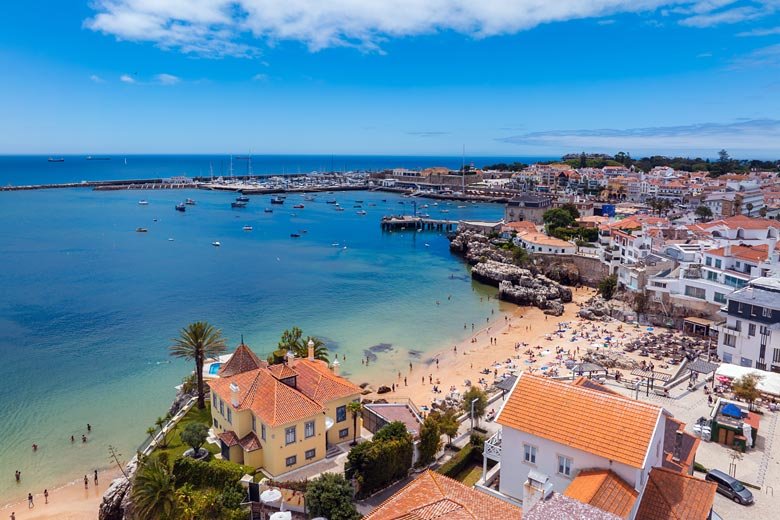
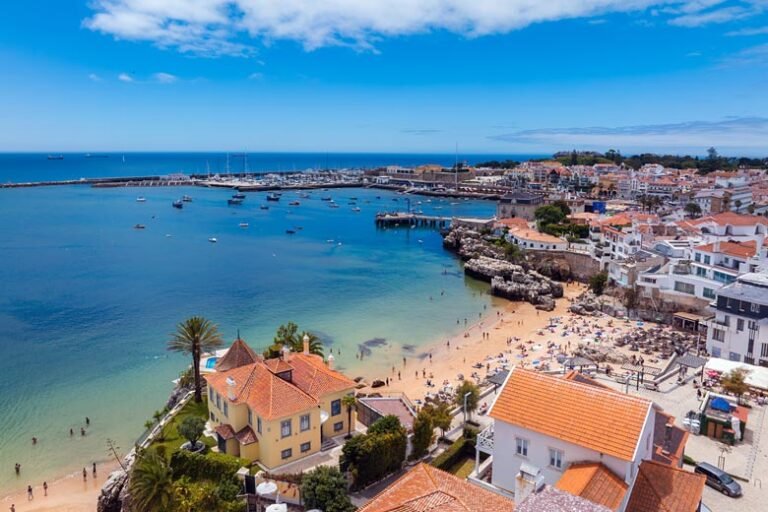
Cascais is one of Portugal’s best-known Atlantic coastal destinations.
It combines:
- Historic centre
- Marina
- Beaches
- Restaurants
- Museums
- Coastal walks
- Atlantic scenery
- Portuguese Riviera atmosphere
Cascais Bay
The central bay is one of the town’s defining landscapes.
Around it you will find:
- Beaches
- Restaurants
- Historic buildings
- Pedestrian streets
- Promenades
Boca do Inferno
Boca do Inferno lies only a short distance from central Cascais.
Atlantic waves have shaped the coastline into a dramatic natural rock formation.
The area is particularly attractive for:
- Photography
- Atlantic scenery
- Sunset
- Coastal walks
Is Boca do Inferno Close to Cascais Centre?
Yes.
It lies only a few minutes away.
Can We Walk to Boca do Inferno?
Yes.
The area is connected with central Cascais through the coastal walking environment.
Praia do Guincho
Guincho lies west of Cascais and provides a wild Atlantic landscape.
It combines:
- Wide sandy beach
- Atlantic Ocean
- Dunes
- Strong winds
- Surf
- Natural scenery
Cascais Marina
Cascais Marina offers:
- Boats
- Restaurants
- Terraces
- Waterfront walks
- Coastal atmosphere
Cascais Historic Centre
The central area combines:
- Traditional streets
- Restaurants
- Shops
- Beaches
- Historic buildings
- Pedestrian spaces
Cascais & Sintra
Cascais lies close to:
Sintra
and the two destinations are frequently combined.
They provide very different experiences.
Cascais
- Atlantic coastline
- Marina
- Beaches
- Riviera atmosphere
Sintra
- Palaces
- Forest
- Mountains
- Historic estates
- Romantic architecture
Cascais & Lisbon
Cascais also provides convenient access to Lisbon while maintaining its own coastal identity.
You finish your international journey in:
an Atlantic destination rather than the capital itself.
Can We Sightsee in Cascais Immediately After Arrival?
Yes.
After a direct transfer, you may still have time to enjoy:
- Historic centre
- Cascais Bay
- Marina
- Boca do Inferno
- Sunset
- Coastal promenade
After a:
10–13+ hour sightseeing journey
avoid tightly scheduled additional activities.
Can We Continue Beyond Cascais?
Yes.
Possible onward destinations include:
- Estoril
- Sintra
- Lisbon
- Lisbon Airport
- Guincho
- Cabo da Roca
Can We Continue to Estoril?
Yes.
Can We Continue to Sintra?
Yes.
Can We Continue to Lisbon?
Yes.
Can We Continue to Lisbon Airport?
Yes, when booked accordingly.
Why Choose a Private Transfer from Seville to Cascais?
A private transfer provides:
- Seville hotel collection
- Santa Cruz collection where vehicle access permits
- Santa Justa collection
- Seville Airport collection when booked accordingly
- Direct international transportation
- Cascais hotel delivery
- Estoril delivery when booked accordingly
- Quinta da Marinha delivery
- Guincho delivery when booked accordingly
- One private vehicle
- No shared shuttle
- No unrelated passengers
- No train changes
- No coach changes
- No repeated luggage handling
- Flexible departure
- Two sightseeing-route concepts
- Child seats
- Comfort breaks
- Multiple vehicle categories
Good to Know
Route: Seville → Cascais
Countries: Spain → Portugal
Direct road distance: Approximately 410–420 km
Direct driving time: Approximately 4h50–5h15
Realistic direct planning: Approximately 5–5.5h
Time difference: Portugal normally 1 hour behind mainland Spain
Route 1 — Algarve & Ria Formosa
Seville → Cacela Velha → Albufeira → Alcácer do Sal → Palmela → Cristo Rei → Cascais
Cacela Velha: 30–45 min
Albufeira: 1–2h
Alcácer do Sal: 30–60 min
Palmela: 45–60 min
Cristo Rei: 30–45 min
Recommended lunch: Albufeira
Alternative lunch: Alcácer do Sal
Complete Route 1: Approximately 11–13+ hours
Route 2 — Historic Interior
Seville → Mérida → Elvas → Évora → Cascais
Mérida: 1.5–2.5h
Elvas: 45–90 min
Évora: 2–3h
Main Spanish stop: Mérida
Main Portuguese stop: Évora
Recommended lunch: Mérida or Évora
Complete Route 2: Approximately 10–12+ hours
Alternative Route
Seville → Monsaraz → Évora → Cascais
Do not combine Monsaraz with:
Mérida + Elvas
unless a specially extended custom itinerary is arranged.
Private vehicle: Yes
Shared shuttle: No
Child seats: Free on request
Standard luggage: Approximately 1 medium suitcase + 1 cabin bag per passenger, subject to capacity
Cross-border service: Yes
Passengers responsible for travel documentation: Yes
Routine permanent border control: Normally no, but temporary checks may occur
Standard non-airport waiting: 20 minutes
Additional waiting: €10 per additional 15 minutes, subject to driver availability
Sightseeing tickets: Not included unless specifically arranged
Distances, driving times and sightseeing durations are approximate and may vary according to traffic, border conditions, roadworks, exact addresses, meals, parking, attraction access and comfort breaks.
Book Your Seville to Cascais Private Transfer
Travel directly from Spain to Portugal or transform the journey into a private sightseeing road trip.
Route 1 — Algarve & Ria Formosa
Seville → Cacela Velha → Albufeira → Alcácer do Sal → Palmela → Cristo Rei → Cascais
Experience:
Andalusia → Ria Formosa → Algarve coast → Sado River → Palmela Castle → Lisbon panorama → Portuguese Riviera
Route 2 — Historic Interior
Seville → Mérida → Elvas → Évora → Cascais
Experience:
Andalusia → Roman Mérida → fortified Elvas → UNESCO Évora → Portuguese Riviera
Every sightseeing stop is optional.
For history:
choose Route 2.
For coastal scenery and landscape variety:
choose Route 1.
For most travellers, selecting:
2–3 substantial sightseeing stops
provides the best balance between sightseeing and arrival time.
Check live price & book